Full Batch Traceability: What We Learned Building Lab Software
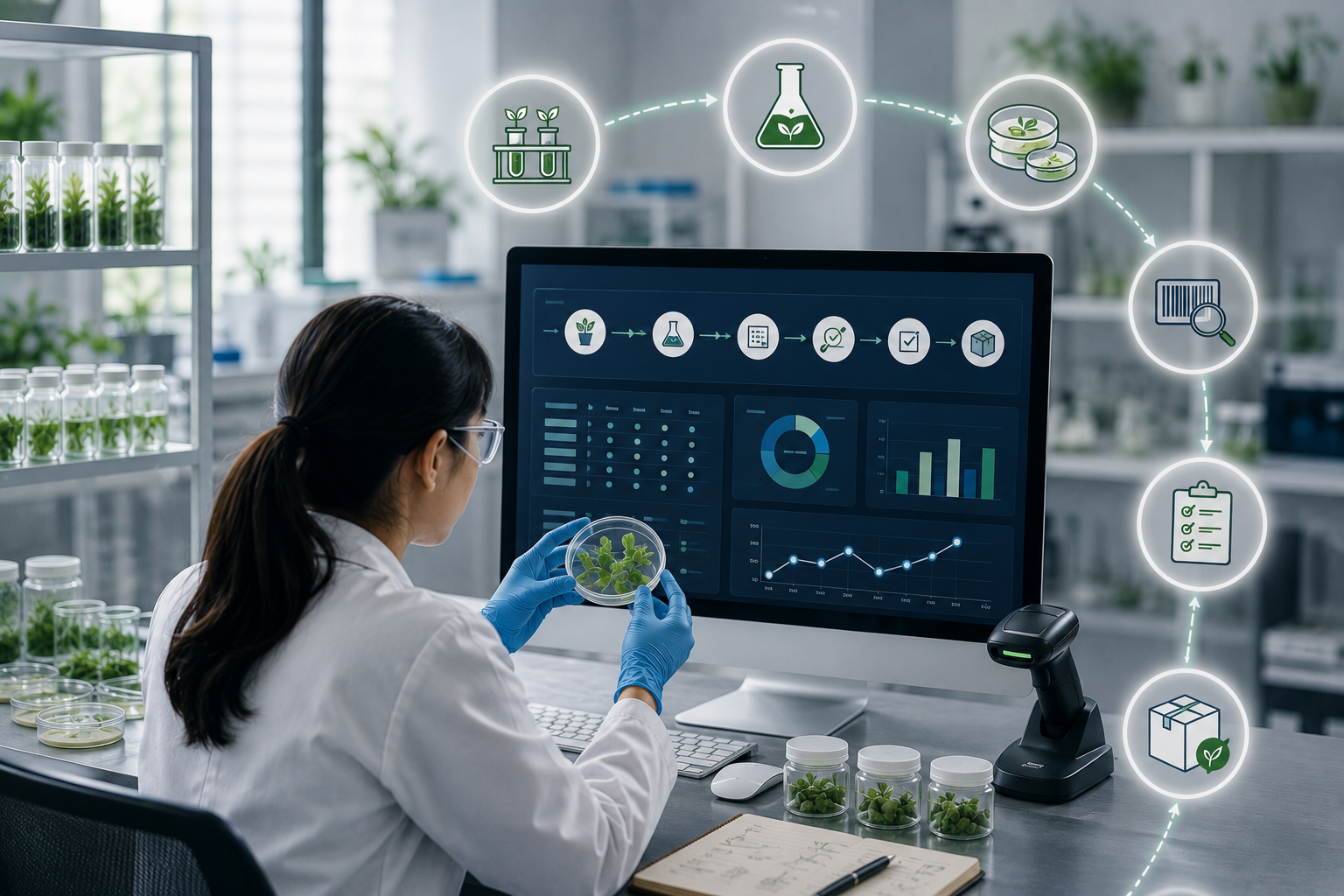
In any laboratory, every sample, culture, or production batch tells a story. Knowing where it came from, who worked on it, what procedures it underwent, and where it ultimately went is essential for maintaining quality and consistency.
When we began developing software for laboratory operations at TiCi NatureLab, we quickly realized that spreadsheets and handwritten records weren't enough. As projects became more complex, tracking every step of a batch's lifecycle became increasingly difficult.
That experience shaped one of the core principles behind our laboratory management software: complete batch traceability.
Why Traceability Matters
Batch traceability is the ability to track every stage of a sample or production batch—from its creation to its final outcome.
In research, biotechnology, tissue culture, agriculture, manufacturing, and quality control laboratories, even a small gap in records can make it difficult to investigate problems, reproduce successful results, or maintain operational consistency.
Good traceability provides complete visibility into every process, making laboratory management more reliable and transparent.
The Challenges We Encountered
As laboratory activities expanded, we faced several common challenges:
- Batch records were maintained across multiple spreadsheets.
- Process updates depended on manual data entry.
- Finding the complete history of a batch often required checking several files.
- Tracking inventory usage and operator activities became increasingly difficult.
- Reviewing past experiments or production cycles took longer than it should have.
The problem wasn't collecting data—it was connecting it.
What We Built
Instead of treating each process as a separate record, we designed our laboratory software to connect every stage of a batch's journey.
Each batch could be linked with:
- Batch identification and unique tracking IDs
- Sample or culture details
- Process history and workflow stages
- Operator records and activity logs
- Material and inventory usage
- Quality control observations
- Production status and final outcomes
Rather than searching through multiple spreadsheets, teams could access the complete history of a batch from a single interface.
Lessons We Learned
Developing laboratory software taught us several valuable lessons.
Consistent Data Is Better Than More Data
Collecting large amounts of information has little value if records are incomplete or inconsistent. Standardized workflows improve both data quality and operational efficiency.
Automation Reduces Human Error
Automatically recording timestamps, process updates, and user activities reduces the risk of missed entries while improving accountability.
Visibility Improves Decision-Making
When laboratory teams can easily trace the history of every batch, identifying trends, solving problems, and improving processes becomes much easier.
Software Should Support Existing Workflows
Technology should adapt to laboratory operations—not force teams to change established scientific procedures unnecessarily.
Beyond Compliance
Traceability is often associated with audits and regulatory requirements, but its value goes much further.
A well-designed traceability system helps laboratories:
- Improve quality control
- Reduce operational errors
- Strengthen documentation
- Increase accountability
- Simplify investigations
- Improve collaboration between teams
- Build confidence in research and production outcomes
Ultimately, better records lead to better decisions.
Building Software Around Real Laboratory Work
At TiCi Technologies, our laboratory software is shaped by practical experience gained through the research and operational workflows at TiCi NatureLab.
Rather than building features based on assumptions, we focus on solving real challenges faced by laboratories every day. The result is software designed to make scientific workflows more organized, transparent, and scalable.
Because when every batch can be traced with confidence, every decision becomes more reliable.